
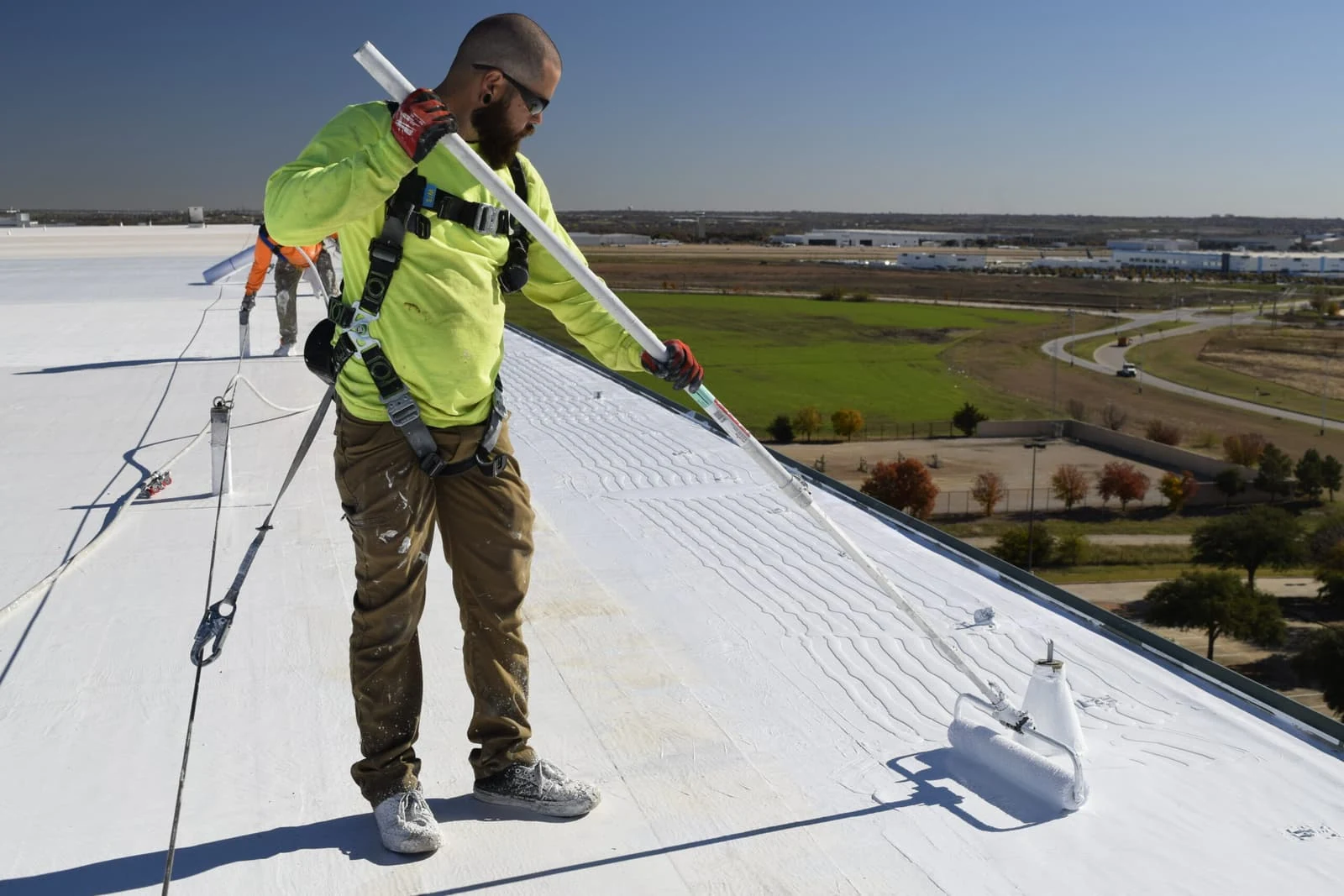
Commercial Roof Maintenance Programs in Lansing
Lansing, Michigan
A Maintenance Schedule That Matches Lansing's Freeze and Storm Calendar
A useful maintenance program records recurring conditions, clears drainage, services vulnerable details, tracks repairs, and turns each visit into a prioritized roof history. Commercial roof maintenance that runs on a generic quarterly checklist misses the two windows that actually matter here: the pre-winter pass that determines how the roof handles months of freeze-thaw cycling, and the spring pass that catches whatever that winter damaged before storm season adds to it.
Why a Fixed Calendar Beats a Reactive Call List
Owners who only call when something leaks are always paying emergency rates for problems that were visible weeks or months earlier. A maintenance program flips that order: scheduled visits find the clogged drain, the lifting seam, or the loose coping joint before it produces an interior call, and the cost of finding it early is a fraction of the cost of an emergency dry-in after a January thaw floods a ceiling.
We build maintenance schedules around the actual weather calendar for mid-Michigan rather than a fixed number of visits per year that ignores what season it is. A roof going into winter gets different attention than one coming out of it.
The Pre-Winter Visit
Before the first hard freeze, we clear every drain and scupper, check that expansion joints and control seams are sealed, confirm parapet coping is secure against wind, and look for any membrane lifting that could trap water and freeze it against the roof surface. Frozen drains are one of the most common causes of ice damming and interior leaks we see across Lansing commercial properties, and clearing debris before the first freeze is the single highest-value item on this visit.
We also check rooftop equipment curbs, since servicing by HVAC contractors during the cooling season sometimes leaves flashing disturbed without anyone reporting it before winter arrives.
The Spring Visit
Once freeze-thaw season is behind the roof, we walk it again looking specifically for what winter did: new seam separations from ice movement, coping joints that opened under repeated expansion and contraction, and any standing water left behind by drains that were still partially blocked. This visit also gets the roof ready for spring severe weather - thunderstorm wind and the occasional summer derecho that mid-Michigan sees - by confirming edge metal and flashing are secure before storm season builds.
What a Maintenance Visit Actually Covers
- Drain, scupper, and gutter clearing on every visit, regardless of whether ponding has been reported
- Visual and hands-on check of seams, flashing, and penetrations across the full roof field
- Parapet coping and edge metal security check, especially before storm season
- Documentation of any deterioration observed since the previous visit
- Small repairs completed on the spot when the fix is minor and low-risk
- A written log entry an owner can reference for capital planning or warranty documentation
That log matters more than most owners expect. When a warranty claim or an insurance conversation comes up later, a documented maintenance history is what shows the roof was cared for, not neglected.
What Maintenance Does Not Replace
A maintenance program extends the useful life of a roof that is fundamentally sound. It does not fix a membrane that is past its service life, and we say so directly when a maintenance visit turns up a pattern of recurring issues that points toward reroofing instead of continued upkeep. An honest maintenance program includes telling an owner when the roof has outgrown what maintenance can do for it.
We also do not stretch a maintenance visit to cover work that should be priced and scoped separately. If a visit turns up a section of membrane that needs more than a spot repair, that gets documented and quoted as its own item rather than folded into the maintenance invoice where the scope and cost are unclear to the owner.
Building the Program Around Your Property Type
A maintenance schedule for a single-story retail strip along Cedar Street looks different from one for a multi-building plant campus or a state office complex with rooftop mechanical penetrations on every section. Larger, more complex roofs typically need more frequent visits and more detailed documentation, while a smaller, simpler roof may only need the standard two-visit cycle plus a call after any major storm. We scope the program to the actual roof, not a flat package sold the same way to every property.
Maintenance Program Questions From Owners
How many maintenance visits does a typical program include per year?
Most Lansing properties are on a two-visit schedule tied to pre-winter and spring, with additional visits added for larger roofs or properties with a history of drainage problems.
Does a maintenance program cover storm damage after severe weather?
Maintenance visits are scheduled, not storm-triggered. After a wind or hail event we do a separate damage assessment, which we can bundle with the next scheduled visit if timing allows.
Will a maintenance program lower our insurance costs?
We cannot speak to how a specific carrier prices a policy, but documented, regular maintenance is generally viewed favorably and gives you a paper trail if a claims conversation ever comes up.
What if a maintenance visit finds something that needs immediate attention?
We flag it and address it right away if it is a small fix, or schedule a follow-up quickly if it needs more than the visit allows. We do not wait for the next scheduled cycle to deal with an active problem.
Is a maintenance program worth it on a newer roof still under warranty?
Often yes, since many manufacturer warranties require documented maintenance to stay valid. A maintenance log can be the difference between a covered claim and a denied one if a defect shows up during the warranty period.
Ready to review the roof scope?
Related Commercial Roofing Services
-
Silicone Coatings as a Capital-Budget Alternative to Replacement
View project -
Standing Seam Metal for Distribution and Plant Buildings
View project -
Repairing Lansing Roofs After Wind, Ice, and Derecho Damage
View project -
TPO Roofing for Lansing's State and Auto-Plant Buildings
View project -
Acrylic Coatings: The Right Tool When Ponding Isn't the Problem
View project -
Honest Roofing Help for a Village the Size of Dansville
View project