
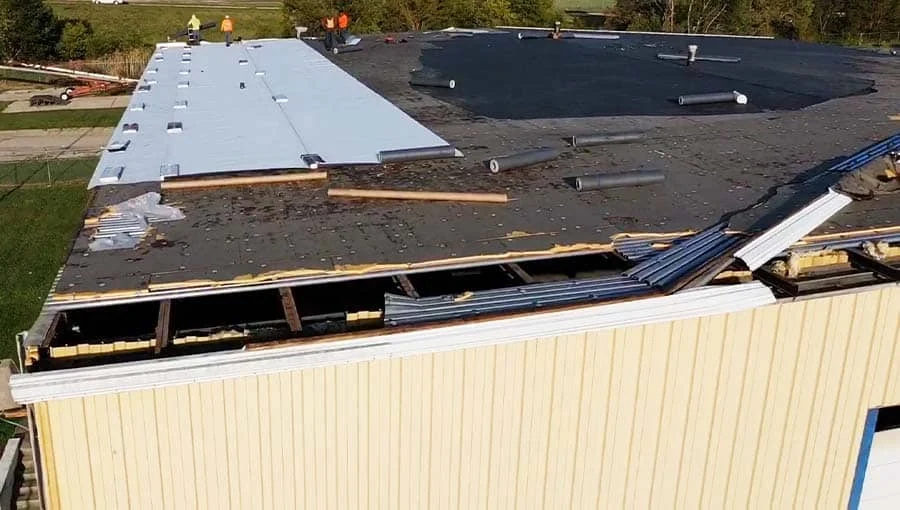
PVC Roof Systems in Lansing, MI
Lansing, Michigan
PVC Roofing for Grease, Chemical, and Cold Exposure in Lansing
PVC earns its place on a roof spec sheet when the building underneath does something that would break down a standard TPO or EPDM membrane faster than normal weathering would. Grease exhaust, chemical exposure, and heavy hot-air welding demands are the usual reasons we bring PVC into a conversation instead of defaulting to the cheaper single-ply option.
Where Grease and Chemical Exposure Actually Show Up
Grocery stores and food-service buildings vent kitchen exhaust directly onto or near the roof surface, and that grease-laden air degrades ordinary TPO membrane over time in a way that isn't always obvious until the membrane is already softening. PVC resists that kind of chemical attack significantly better, which is why we specify it on grocery roofs across the region and on buildings with any kind of process exhaust.
The dairy processing operation near St. Johns is a clear example of the kind of facility where chemical exposure has to factor into membrane selection from the start. Processing plants often vent cleaning chemicals, oils, or other compounds that a standard membrane wasn't designed to tolerate, and choosing the wrong system there isn't a five-year mistake, it's a two-year mistake.
Hot-Air Welding in Michigan's Cold-Weather Windows
PVC seams are hot-air welded, similar to TPO, and the same cold-weather constraints apply: membrane and ambient temperature both need to be within the manufacturer's workable range for a weld to bond properly. On a PVC project we build extra schedule buffer into fall installs specifically because a chemical-exposure roof is exactly the kind of roof where a bad seam becomes a real liability, well beyond a maintenance nuisance.
We sequence welding to prioritize field seams and detail work early in the project window and hold flexibility for a second pass on any welds that need rework before temperatures drop past the point where hot-air welding stays reliable.
Freeze-Thaw and Flashing Detail on Process Buildings
Process and food-service buildings often have more roof penetrations than a typical office building: exhaust stacks, grease traps, refrigeration lines, and roof-mounted equipment specific to the operation. Every one of those penetrations is a flashing detail that has to survive freeze-thaw movement without opening a path for grease-laden condensation or chemical runoff to reach the membrane's edges.
We spend more inspection time at those penetrations on process buildings than we do on the open field, because that's where a chemical-exposure roof actually fails first, not in the middle of the membrane.
Medical and Institutional Applications
PVC also comes up on hospital and medical facility roofs, including buildings connected to the region's larger health systems, where rooftop mechanical equipment for surgical air handling and other critical systems runs continuously and adds both heat and vibration load the membrane has to tolerate for decades without a failure that could interrupt operations. In those cases, chemical resistance matters less than long-term reliability under constant mechanical load, and PVC's weld strength and seam durability are usually the deciding factor over a cheaper single-ply option.
- Softening or tackiness near kitchen or process exhaust vents
- Discoloration around grease traps or chemical discharge points
- Weld seam separation near heavily-serviced mechanical curbs
- Flashing failures at penetrations serving process equipment
- Membrane thinning in high-traffic technician walk paths
- Odor or staining suggesting chemical contact with the membrane
Any one of those signs on a process or food-service roof gets flagged for immediate attention, because chemical exposure roofs degrade faster once a weakness opens than a standard office roof does.
Cost and Where PVC Doesn't Make Sense
PVC costs more than TPO on a like-for-like basis, and we don't recommend it on buildings without a real chemical, grease, or process exposure concern. A standard retail or office building rarely needs it. We'll say that directly rather than upselling a system the roof doesn't require.
On a straightforward retail or office roof without process exposure, we'll recommend TPO instead and explain exactly why the extra cost of PVC wouldn't buy that building anything meaningful. The same logic applies to a partial reroof: if only one tenant space vents grease onto the roof, we'll sometimes isolate PVC to that section rather than specify it across a whole shared roof that doesn't need it.
Questions Owners Ask About PVC Roofing
Is PVC worth the extra cost over TPO for a typical office building?
Usually not. Without grease, chemical, or heavy process exposure, TPO performs comparably for less money. We only recommend PVC where the exposure actually justifies it.
How does PVC handle Michigan's cold winters compared to TPO?
Similarly overall, since both are heat-welded single-ply membranes with comparable cold-weather welding constraints. The performance difference between them shows up in chemical resistance, not cold tolerance.
Can PVC go directly over an existing grease-exposed roof?
Only after the existing membrane and insulation are evaluated for contamination and moisture. Grease exposure often means the insulation underneath needs replacement even if the deck itself is sound.
Does PVC need different maintenance than TPO?
The core maintenance is similar, but process buildings usually need more frequent inspection at exhaust and penetration points, regardless of membrane type, simply because of what's venting onto the roof.
How long does a PVC roof typically last on a process building?
With proper detailing at penetrations and consistent inspection, PVC roofs on process buildings commonly outlast a standard membrane exposed to the same conditions, though the honest answer depends heavily on how aggressive the specific exposure is.
Ready to review the roof scope?
Related Roof Systems
-
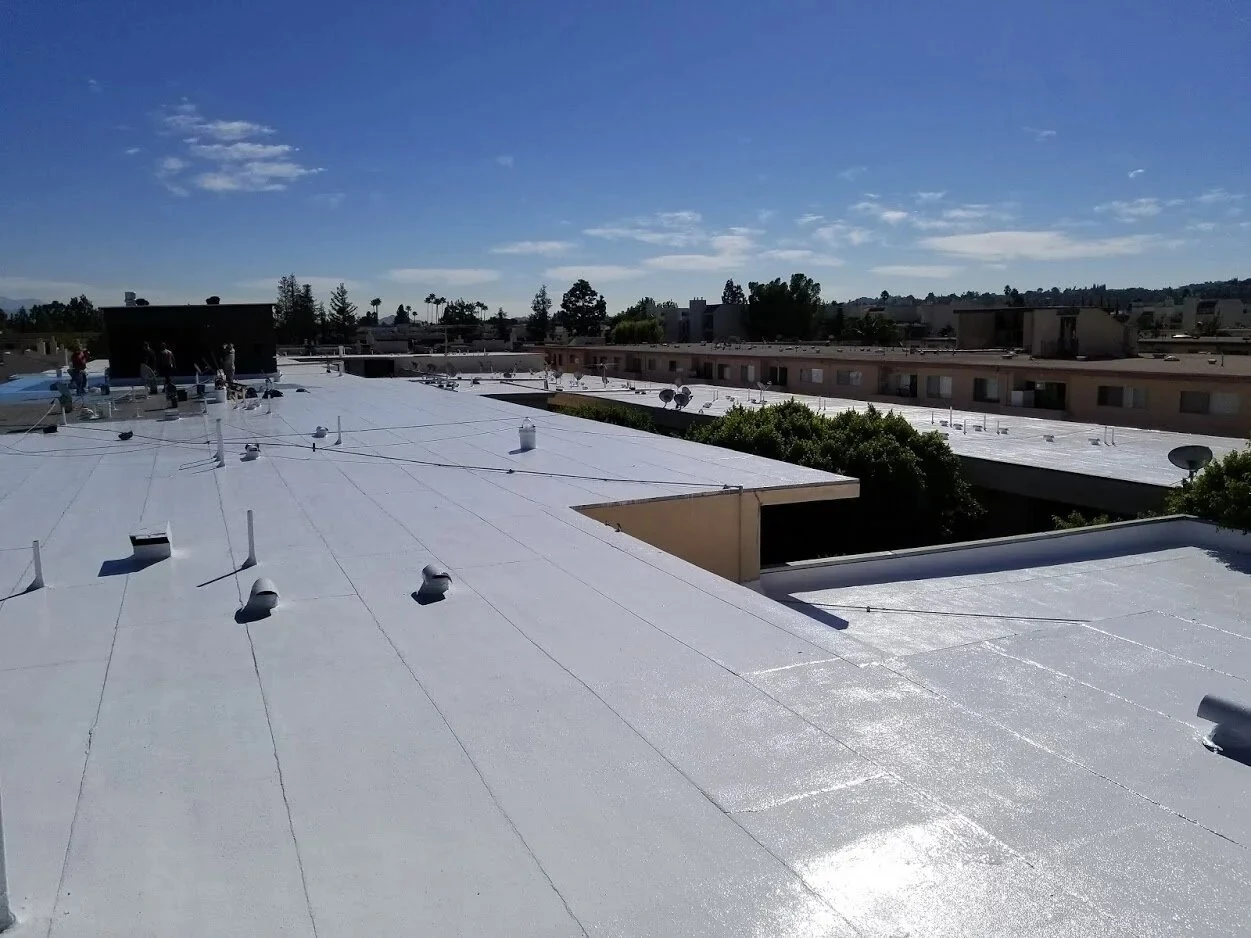
Silicone Roof Coating as a Restoration Path for Aging Lansing Roofs
View project -
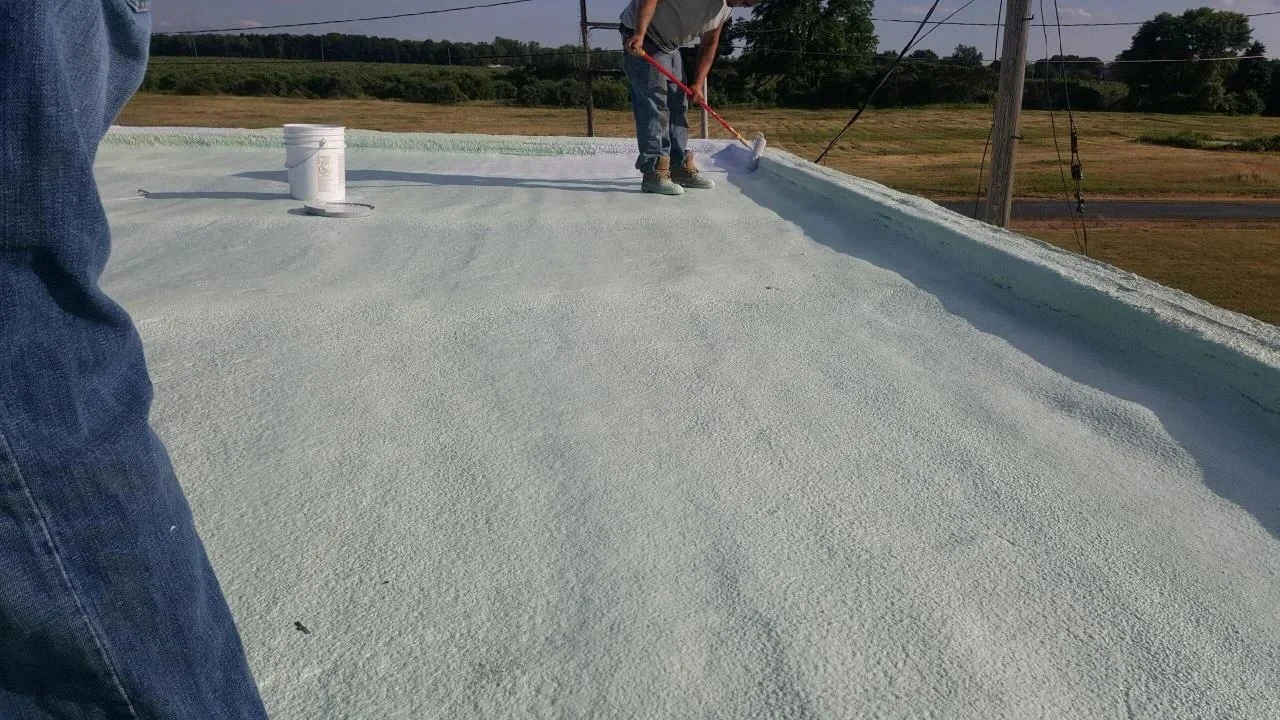
Spray Foam Roofing on Irregular and Plant-Era Lansing Decks
View project -
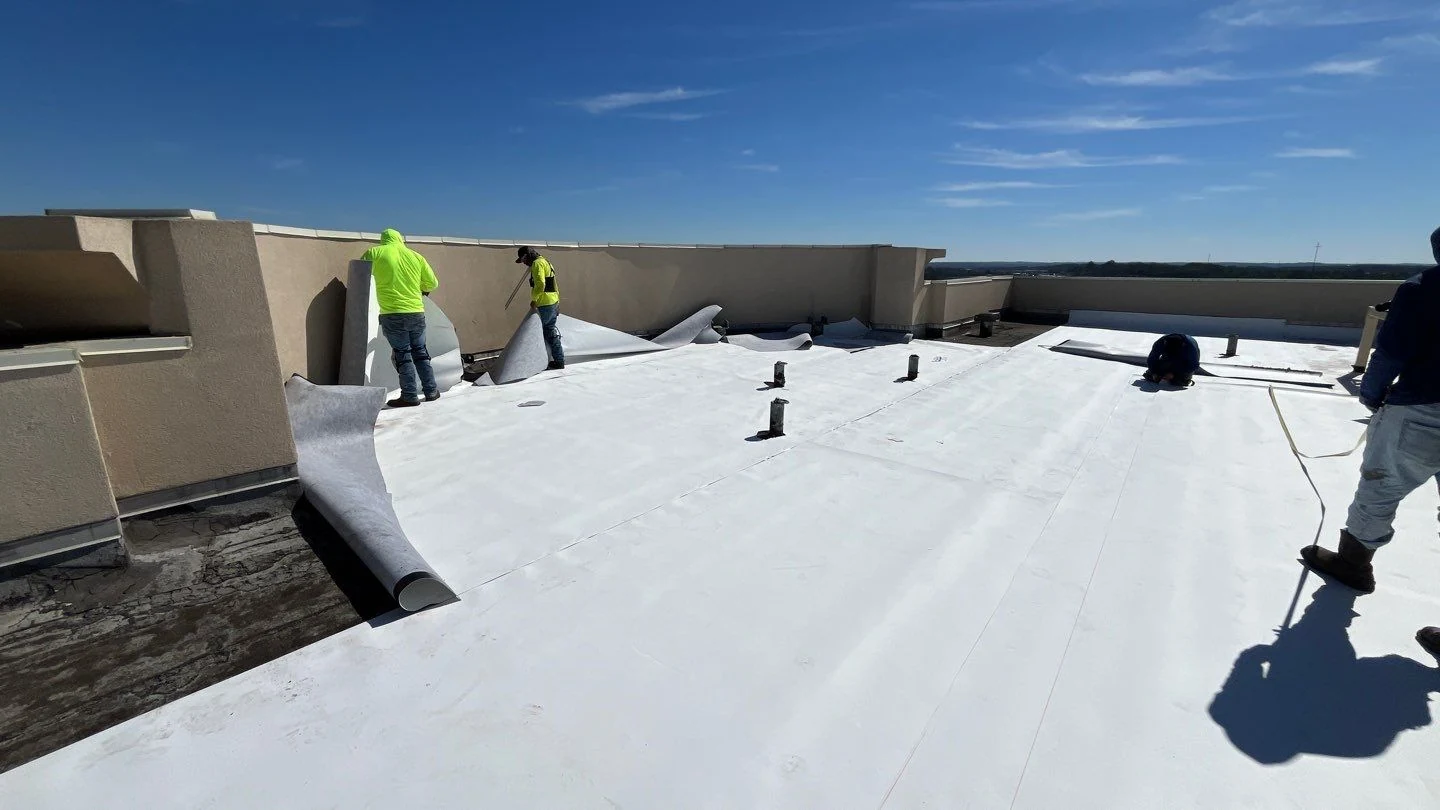
TPO 60 Mil: The Baseline Spec for Most Lansing Reroofs
View project -
When 80 Mil TPO Is Worth the Extra Cost in Lansing
View project -
Black EPDM on Older Lansing Roofs: What Still Works and What Doesn't
View project -
When a Lansing Roof Stops Being a Repair and Becomes a Replacement
View project