
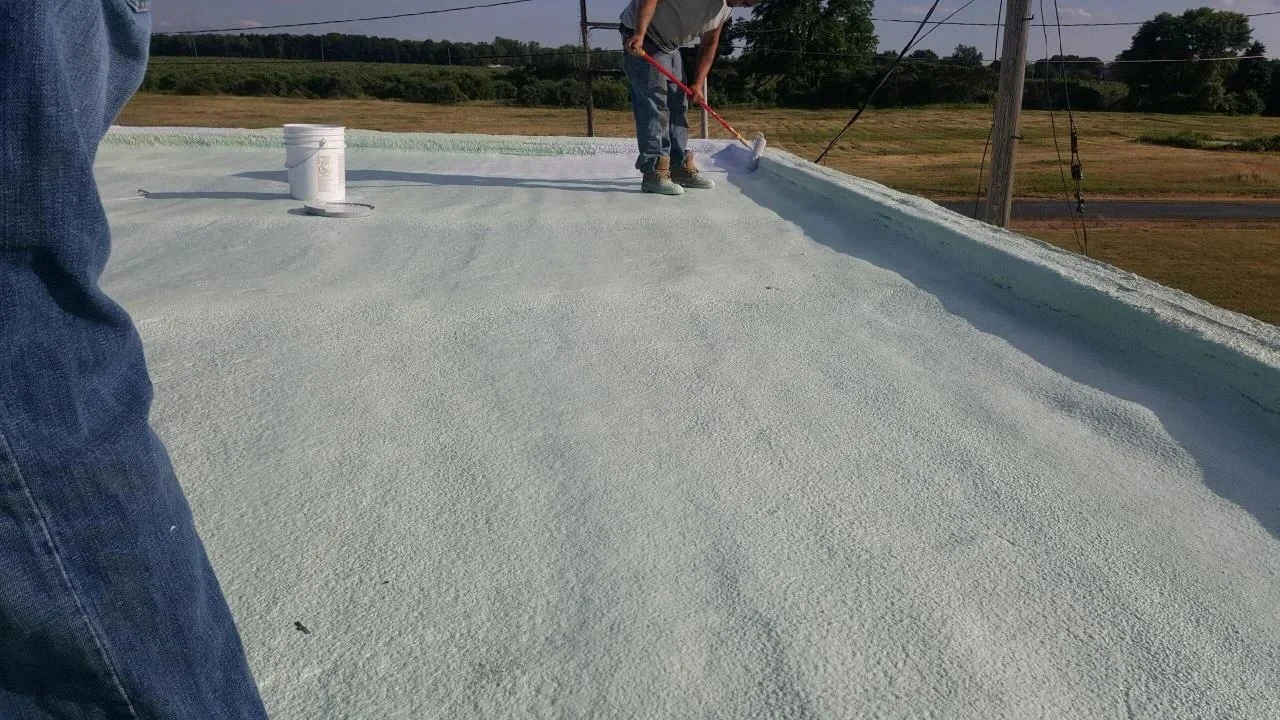
Spray Polyurethane Foam Roof Systems in Lansing, MI
Lansing, Michigan
Spray Foam Roofing on Irregular and Plant-Era Lansing Decks
Spray polyurethane foam solves a problem other roof systems can't: it self-levels and adds insulation value across a deck that isn't flat or consistent, which comes up often on older plant-era buildings around Lansing that were added onto, reconfigured, or repaired piecemeal over decades. When we recommend SPF, it's usually because the deck itself, ahead of the old membrane, needs a solution that a standard sheet membrane can't provide.
Why Irregular Decks Push Us Toward Foam
Older manufacturing and warehouse buildings near Grand Ledge, Charlotte, and the industrial parks along US-127 and I-96 often have decks that were built in phases, patched after equipment changes, or never fully leveled to begin with. A sheet membrane over that kind of substrate telegraphs every dip and seam in the deck below, and low spots become permanent ponding locations no matter how carefully the membrane is installed.
SPF sprays on as a liquid and expands to fill low spots and build slope toward drains as part of the application itself. That self-leveling property is the main reason we bring foam into the conversation on irregular decks instead of defaulting to a single-ply recover that would just replicate the existing drainage problems.
Insulation Value in Freeze-Thaw Conditions
Foam roofing adds continuous insulation across the entire roof surface with no thermal breaks at seams or fasteners, which matters in a climate with hard freeze-thaw cycling. A building with consistent rooftop insulation loses less heat through the roof deck and experiences less condensation risk at the underside of the deck compared to a roof with gaps or compressed insulation from age and settling.
On plant-era buildings where the original insulation, if any, has degraded or shifted over decades, a foam retrofit can meaningfully improve the building's thermal performance while also solving the waterproofing problem in the same project, rather than treating insulation and membrane as two separate line items.
Cure-Window Constraints in Michigan Weather
SPF application is sensitive to temperature, humidity, and wind at the moment of spraying. The foam has to cure correctly during application or the finished surface can end up with inconsistent density, poor adhesion, or a surface texture that traps water instead of shedding it. Michigan's fall weather brings exactly the combination of dropping temperature and rising humidity that narrows the workable spray window, so we watch forecasts closely and plan SPF projects around stretches of dry, stable weather rather than a fixed calendar date.
We won't spray foam into marginal humidity or wind conditions just to keep a schedule, because a foam application that cures poorly is far more expensive to correct than a delayed start.
The Coating Layer and Long-Term Maintenance
Foam roofs always get a protective coating over the cured foam, and that coating is what actually takes UV exposure, foot traffic, and weathering over the roof's life. The coating needs periodic recoating on a maintenance cycle to keep protecting the foam underneath, and skipping that maintenance is the most common reason we see foam roofs fail prematurely. We build a recoat schedule into any SPF project from the start so the owner knows what maintenance the system actually requires, beyond what the install costs.
- Coating showing UV degradation, chalking, or thinning
- Foam exposed where coating has worn through
- Soft spots suggesting moisture intrusion beneath the coating
- Ponding returning in areas the foam was meant to correct
- Cracking at expansion joints or roof edge transitions
- Visible density inconsistency from an original cure-quality issue
Catching these early, especially coating wear, is what keeps a foam roof performing for its full expected service life instead of failing at the coating layer years before the foam itself would have needed attention.
Where SPF Fits and Where It Doesn't
We recommend foam for irregular decks, buildings needing added insulation value, and roofs with complex geometry where a sheet membrane would require excessive detailing. We don't recommend it for owners unwilling to commit to the recoat maintenance cycle, since a neglected foam roof degrades faster than a neglected membrane roof would.
On a flat, well-drained deck with a straightforward shape, a standard single-ply membrane usually costs less to install and maintain, and we'll say so rather than defaulting to foam because it's a more specialized scope with a different cost structure.
Questions Owners Ask About Spray Foam Roofing
Does spray foam work on a flat, regular deck too, or only irregular ones?
It can, but the self-leveling advantage matters less on a flat, well-drained deck, where a single-ply membrane is often the more economical choice.
How often does the protective coating need to be reapplied?
It depends on the coating type and UV exposure, but we build a specific recoat interval into every SPF maintenance plan rather than leaving it open-ended.
Can foam be applied over an old built-up roof without tearing it off?
Often yes, if the existing roof is dry and sound, which is one of the appeals of foam on aging plant-era buildings where a full tear-off would be disruptive to operations.
What happens if foam gets sprayed in the wrong weather?
Density and adhesion can suffer, which shows up later as soft spots or premature coating failure. We delay application rather than spray into marginal conditions.
Is foam roofing more expensive than a single-ply recover?
It depends on deck condition and insulation needs. On an irregular deck needing both leveling and added insulation, foam can be cost-competitive once you account for what a membrane recover wouldn't fix.
Ready to review the roof scope?
Related Roof Systems
-
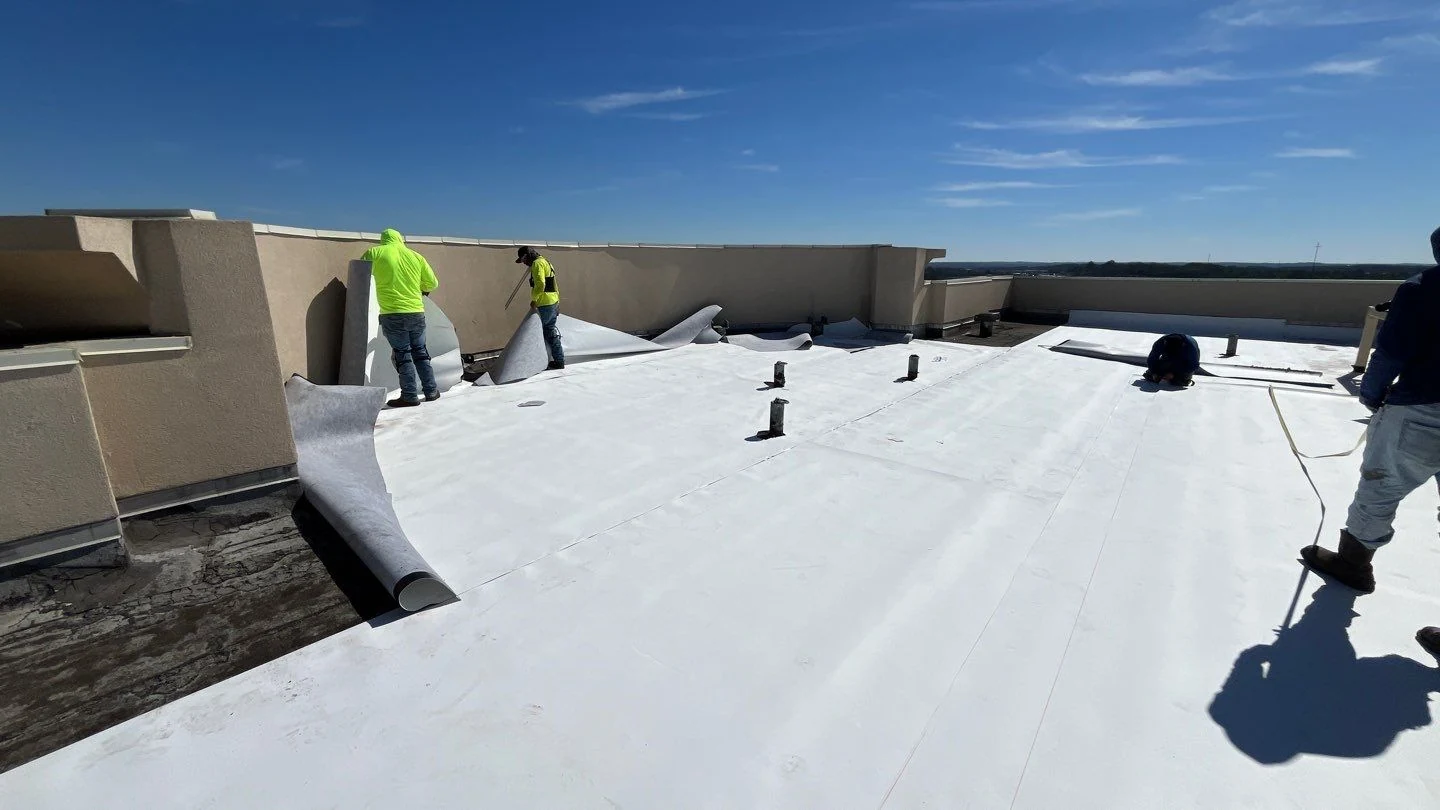
TPO 60 Mil: The Baseline Spec for Most Lansing Reroofs
View project -
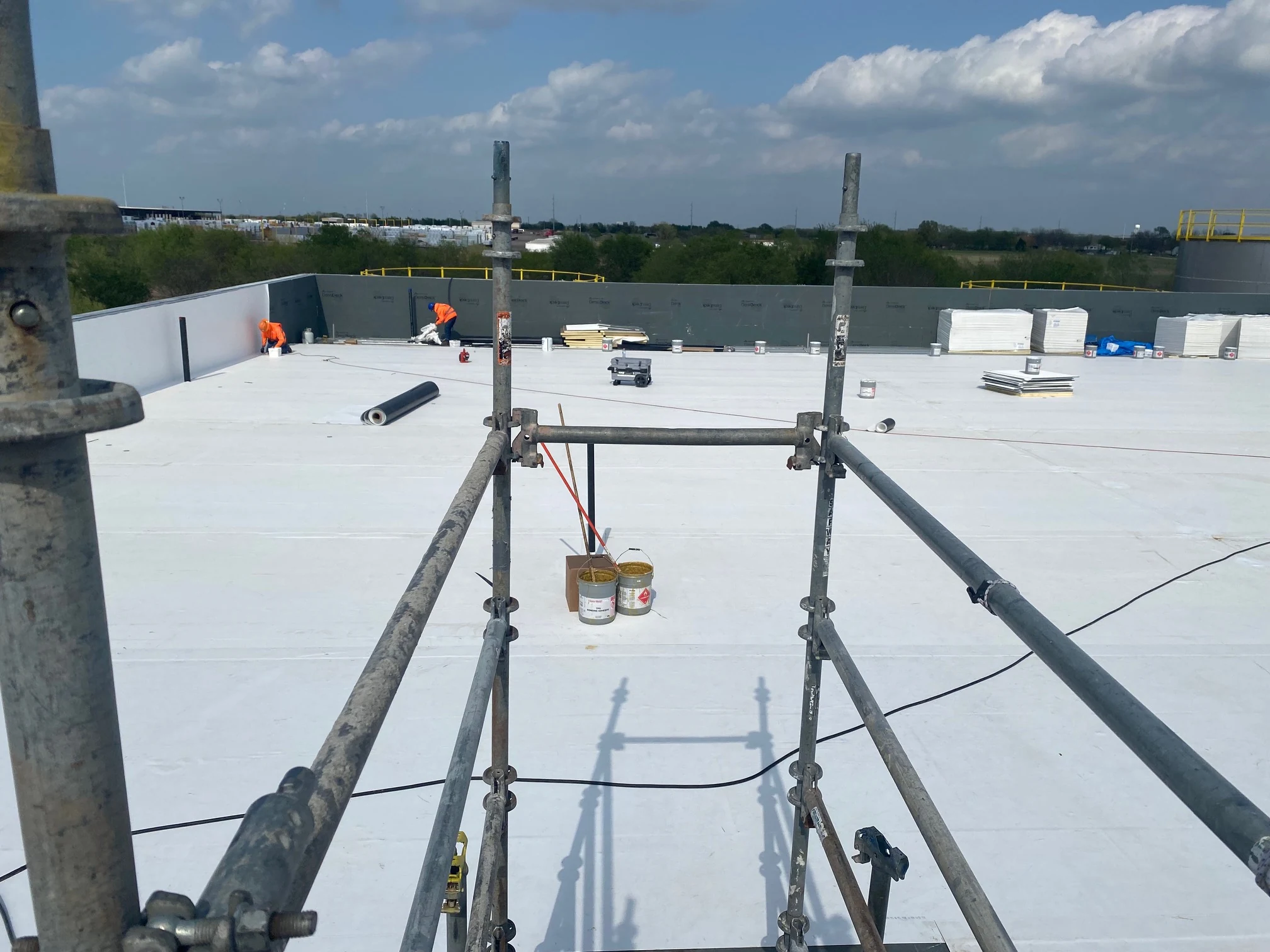
When 80 Mil TPO Is Worth the Extra Cost in Lansing
View project -
Black EPDM on Older Lansing Roofs: What Still Works and What Doesn't
View project -
White EPDM Ballasted and Adhered Systems for Lansing Roofs
View project -
Modified Bitumen SBS: Multi-Ply Redundancy for Older Lansing Roofs
View project -
What a Roof Recover Can Hide - and When It Shouldn't
View project