
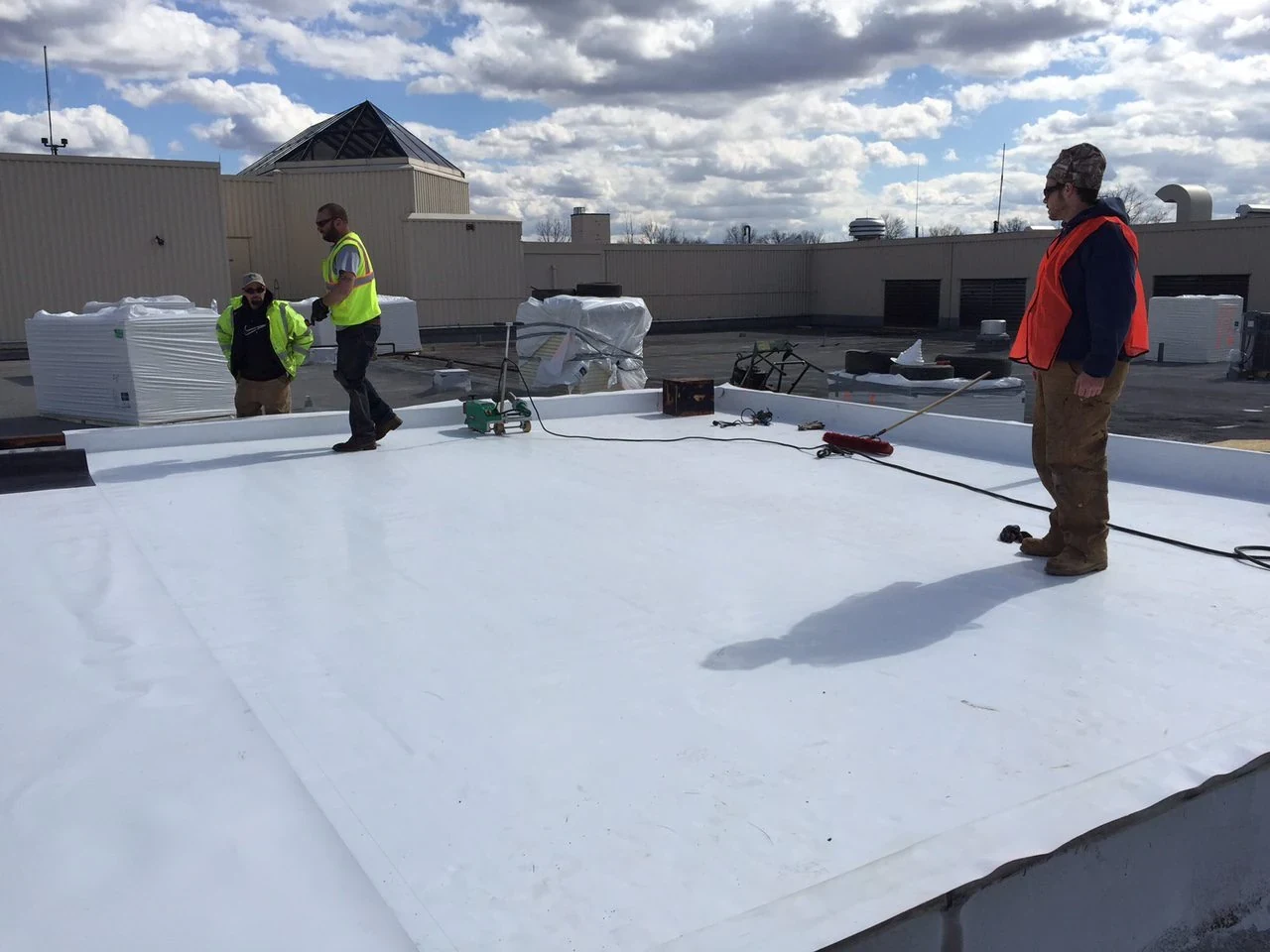
TPO Single Ply Roofing in Lansing, MI
Lansing, Michigan
TPO Roofing for Lansing's State and Auto-Plant Buildings
TPO has become the default single-ply membrane for a lot of the flat roof work we see across state office buildings, GM plant additions, and the distribution buildings along US-127. It's a good system when it's specified and installed correctly. It's a common source of expensive callbacks when it isn't.
Where TPO Shows Up Most in This Market
We install and repair TPO on state agency buildings around the Capitol complex, on mechanical-heavy roof sections at the Lansing Grand River and Delta Township assembly plants, and on newer retail and office construction around Okemos and Eastwood Towne Center. It's also become the go-to re-cover option over old built-up roofs on Michigan State-adjacent buildings where the university wants a reflective, code-compliant membrane without adding excessive dead load.
TPO's popularity isn't an accident. It welds cleanly, it's reflective enough to help with summer cooling load on state and campus buildings, and it handles the wide seasonal temperature swing between a January cold snap and a July heat spell better than some older membrane types.
The Bid Trap: Why the Cheapest TPO Quote Usually Costs More
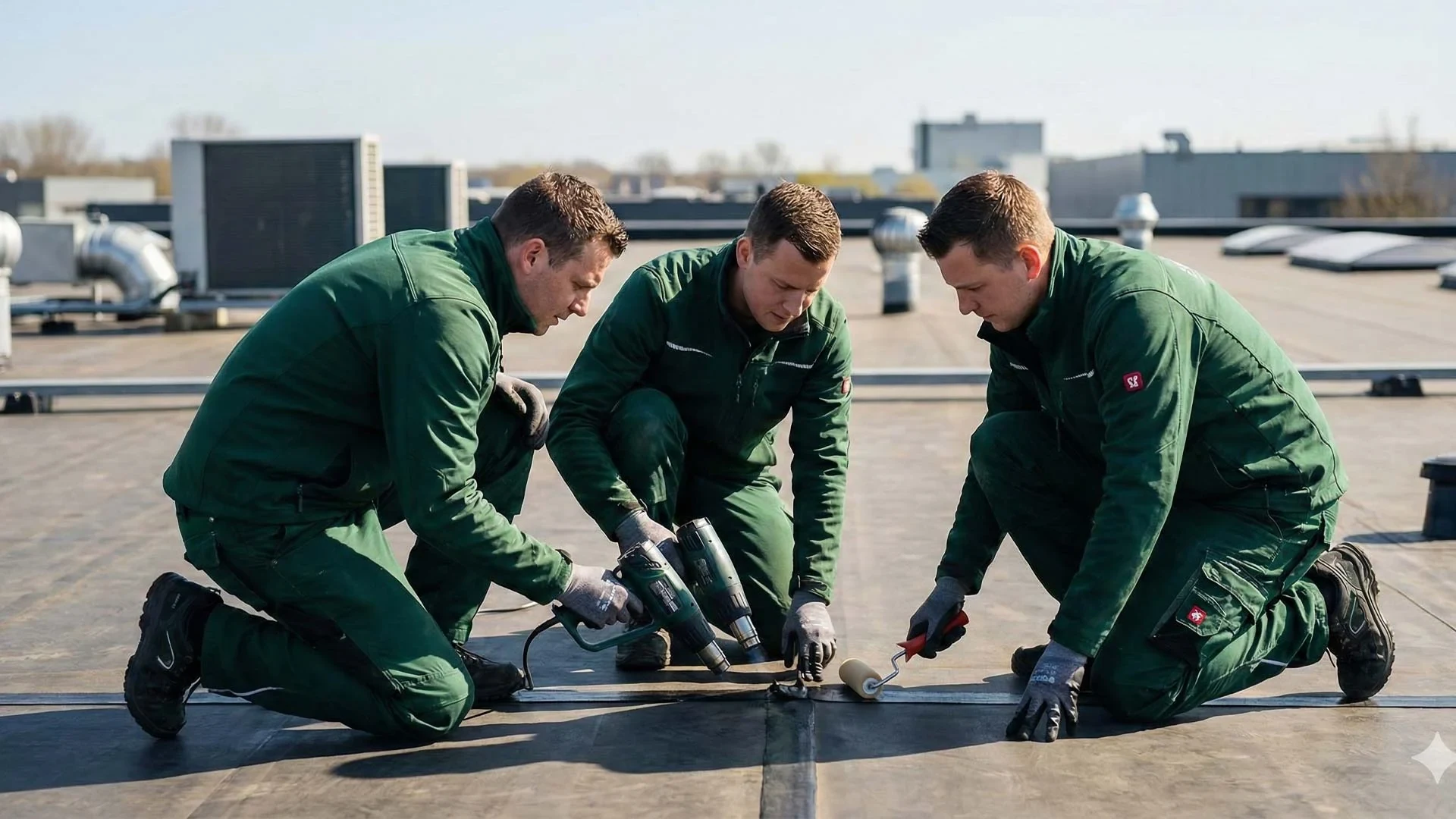
Because TPO is sold by the roll and priced by the square, it's easy for a low bid to hide a thinner membrane, a wider fastening pattern, or a seam-welding crew with minimal training. On a public bid or a facilities RFP, three contractors can submit "TPO roof replacement" line items that look identical on paper and describe three very different roofs.
An owner comparing bids on price alone has no way to catch that difference until the roof is already down. We tell facilities managers to ask each bidder for mil thickness, fastening spacing, and seam-welding method in writing before comparing numbers, because those three details predict most of what fails on a TPO roof five to ten years out.
What Actually Determines How Long a TPO Roof Lasts
A handful of decisions made before the crew ever gets on the roof matter more than anything that happens afterward:
- Membrane thickness - 60-mil versus 80-mil changes puncture and hail resistance directly
- Fastening pattern rated for the actual wind uplift zone, not a generic minimum
- Seam welds tested with a probe on every run, not spot-checked
- Insulation board that's mechanically sound under the membrane, beyond simply being present
- Flashing detail at curbs, parapets, and penetrations, where most leaks originate
- Walkway pad placement at service paths to mechanical equipment
None of that shows up on a glossy proposal photo. It shows up in a moisture scan five years later, or it doesn't.
TPO and Michigan's Freeze-Thaw Cycle
TPO handles cold reasonably well compared to some membranes, but the freeze-thaw pattern we get in mid-Michigan is still hard on any single-ply system. Water that gets under a poorly welded seam in November doesn't just sit there - it freezes, expands the seam gap, thaws, and works further in during the next warm stretch. By the time a facilities team notices a stain on an interior ceiling tile, the water has usually been cycling through that seam for one or two winters already.
That's why we push for probe-testing every seam at installation rather than relying on a visual pass. A visual pass can miss a partial weld that looks fine in October and opens under its first hard freeze.
Rooftop Equipment Loads on Plant and Institutional Roofs
GM plant roofs and larger state buildings carry a lot of rooftop mechanical equipment - makeup air units, exhaust fans, conduit racks - and every piece of that equipment means a penetration and a curb detail. On these roofs the membrane itself is rarely the weak point; the flashing around equipment curbs is. We spend a disproportionate amount of inspection time at curb flashing on plant and institutional roofs for exactly that reason.
We've traced repeat leak calls at plant and state office roofs back to the same root cause more than once: a curb flashing detail that was fine when a mechanical unit was first set, then never resealed correctly after that unit was swapped or a new one added years later. Facilities teams should flag any rooftop equipment change to their roofer, including a routine HVAC replacement, because that's exactly the moment a flashing detail gets disturbed and doesn't always get put back the way it needs to be.
Common TPO Questions from Facilities Managers
Is TPO a good fit for a state or municipal building on a tight capital budget?
Usually yes, if the spec isn't stripped down to the bare minimum to hit a price target. The membrane cost difference between 60-mil and 80-mil is small relative to the total job; the performance difference over fifteen winters is not.
How long should a properly installed TPO roof last in this climate?
A correctly specified and installed TPO roof holds up well through multiple decades of Michigan winters, though actual service life depends heavily on foot traffic, rooftop equipment density, and maintenance follow-through.
Can TPO be installed over an existing roof?
Sometimes, if the existing deck and insulation are dry and structurally sound and code allows it. We check moisture content and layer count before recommending a re-cover instead of a tear-off.
What's the biggest mistake you see in TPO bids on public buildings?
Bids that don't specify fastening pattern or seam-welding method at all, leaving those details to be decided in the field. Those two items should be locked in before a contract is signed, not figured out on install day.
We've reviewed public bid packages for state and school buildings where three contractors submitted numbers within a few thousand dollars of each other, and only one of them had actually specified an 80-mil membrane with a tight fastening pattern rated for the building's real wind exposure. The other two were pricing a thinner system and hoping the difference wouldn't get questioned. It usually doesn't, until the roof is five years old.
Do you offer a warranty on TPO installations?
Manufacturer warranties are available depending on the system specified and are separate from our own workmanship coverage; we go over both in writing before work starts.
Ready to review the roof scope?
Related Commercial Roofing Services
-
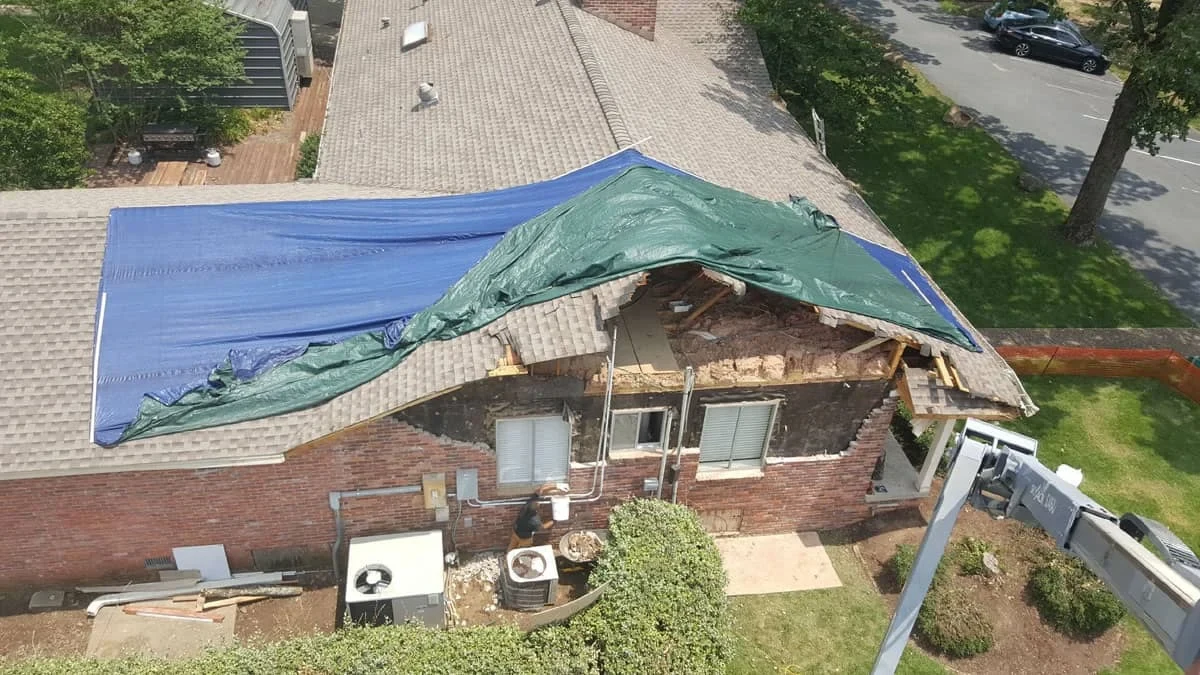
Repairing Lansing Roofs After Wind, Ice, and Derecho Damage
View project -
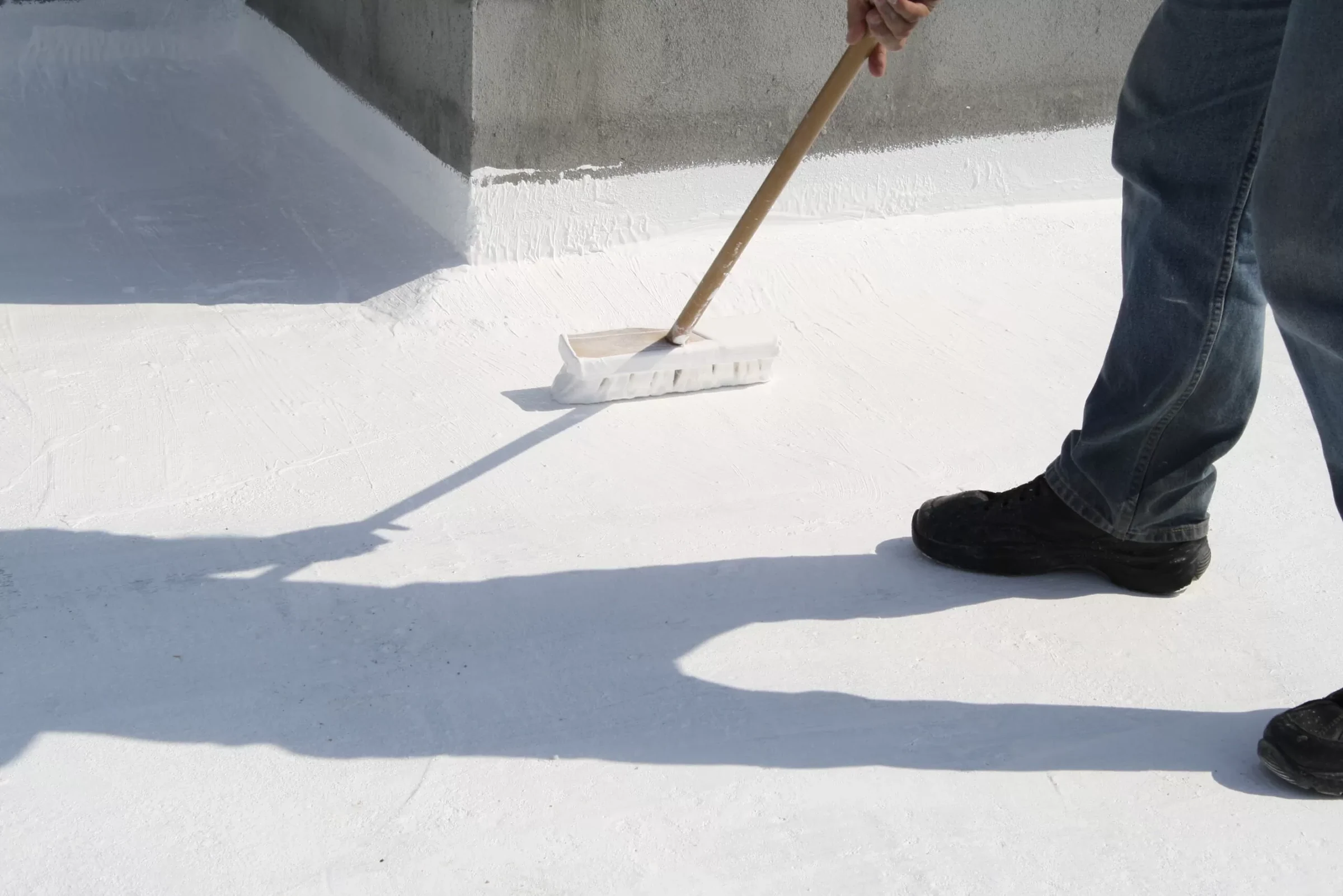
Acrylic Coatings: The Right Tool When Ponding Isn't the Problem
View project -
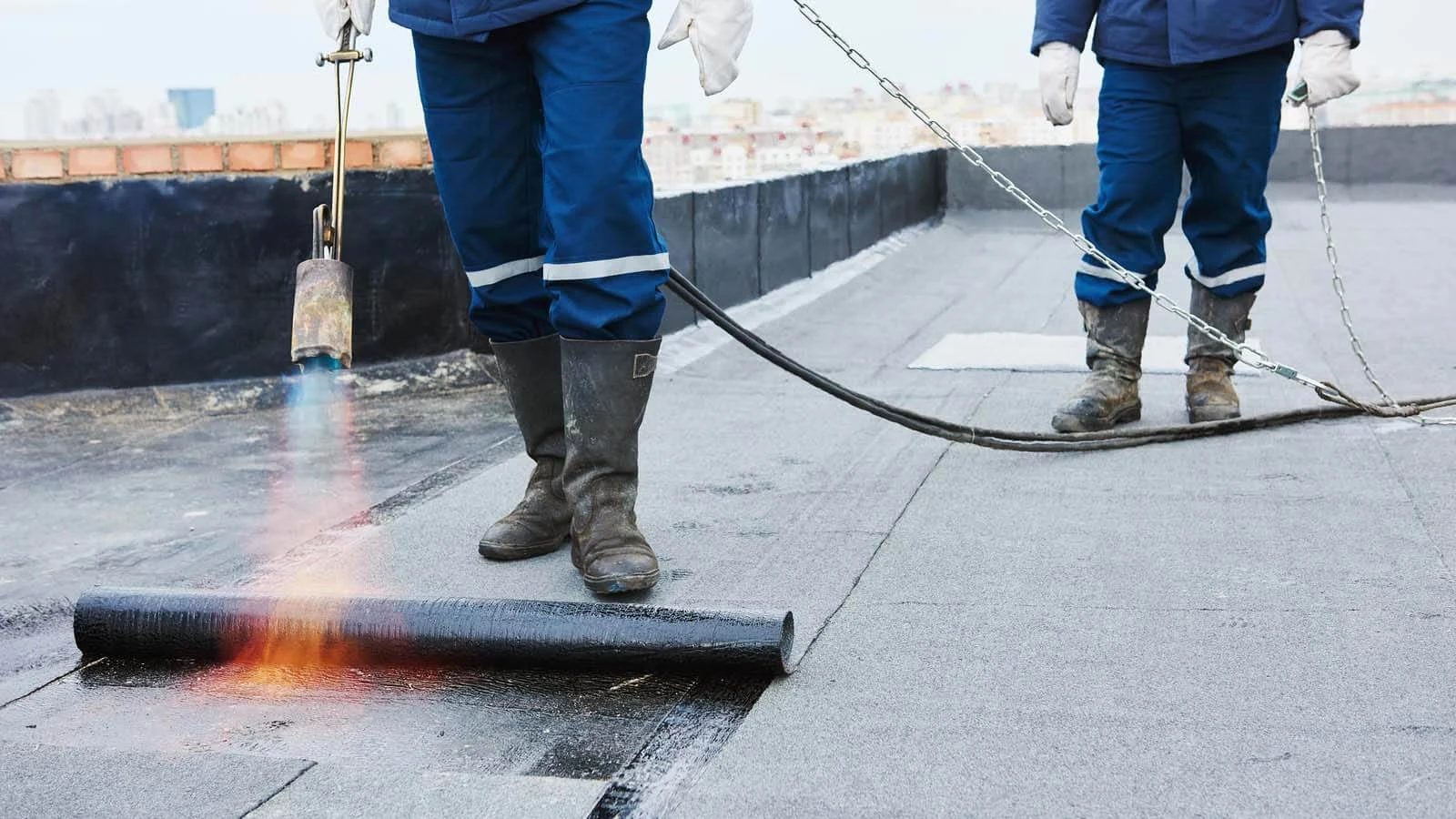
Legacy Gravel Roofs Still in Service Downtown and on Campus
View project -
Reroofing Decisions for Lansing's State, Auto, and Campus Roofs
View project -
What a Roof Inspection Should Actually Tell a Lansing Owner
View project -
Roofing for Bath Township's Growing Retail and MSU-Adjacent Buildings
View project