
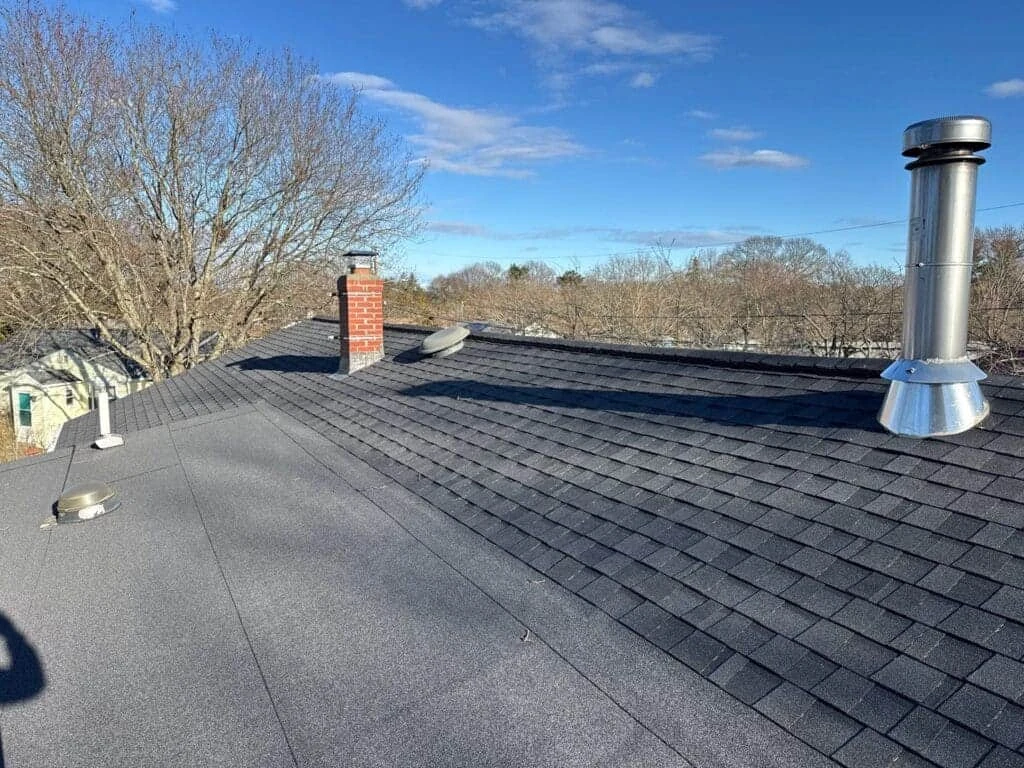
Modified Bitumen Roofing in Lansing, MI
Lansing, Michigan
Modified Bitumen on Older State and Campus Buildings
A lot of the flat roofs on older state office buildings and Michigan State's academic stock were built up in modified bitumen decades ago, and many of them are still there - patched, re-coated, sometimes re-covered once, but never fully replaced. Modified bitumen has a reputation for durability in this market for a reason: multi-ply systems give an owner some margin for error that a single membrane doesn't.
Why Institutional Owners Still Choose Modified Bitumen
Government and university facilities teams often hold buildings for thirty or forty years rather than sell them, and that changes the roofing calculus. A multi-ply modified bitumen system costs more up front than a single-ply membrane, but a granule-surfaced cap sheet over base and interply layers gives redundancy - a puncture through the top layer doesn't necessarily mean water reaches the deck the way it can on a thinner single-ply system. For an owner planning to hold a building for decades, that redundancy is often worth the added installed cost.
We see this decision most often on state agency buildings and MSU academic buildings where the facilities team has watched a roof age for twenty-plus years and wants a similar service life out of the replacement.
Torch-Down Risk on Occupied Buildings
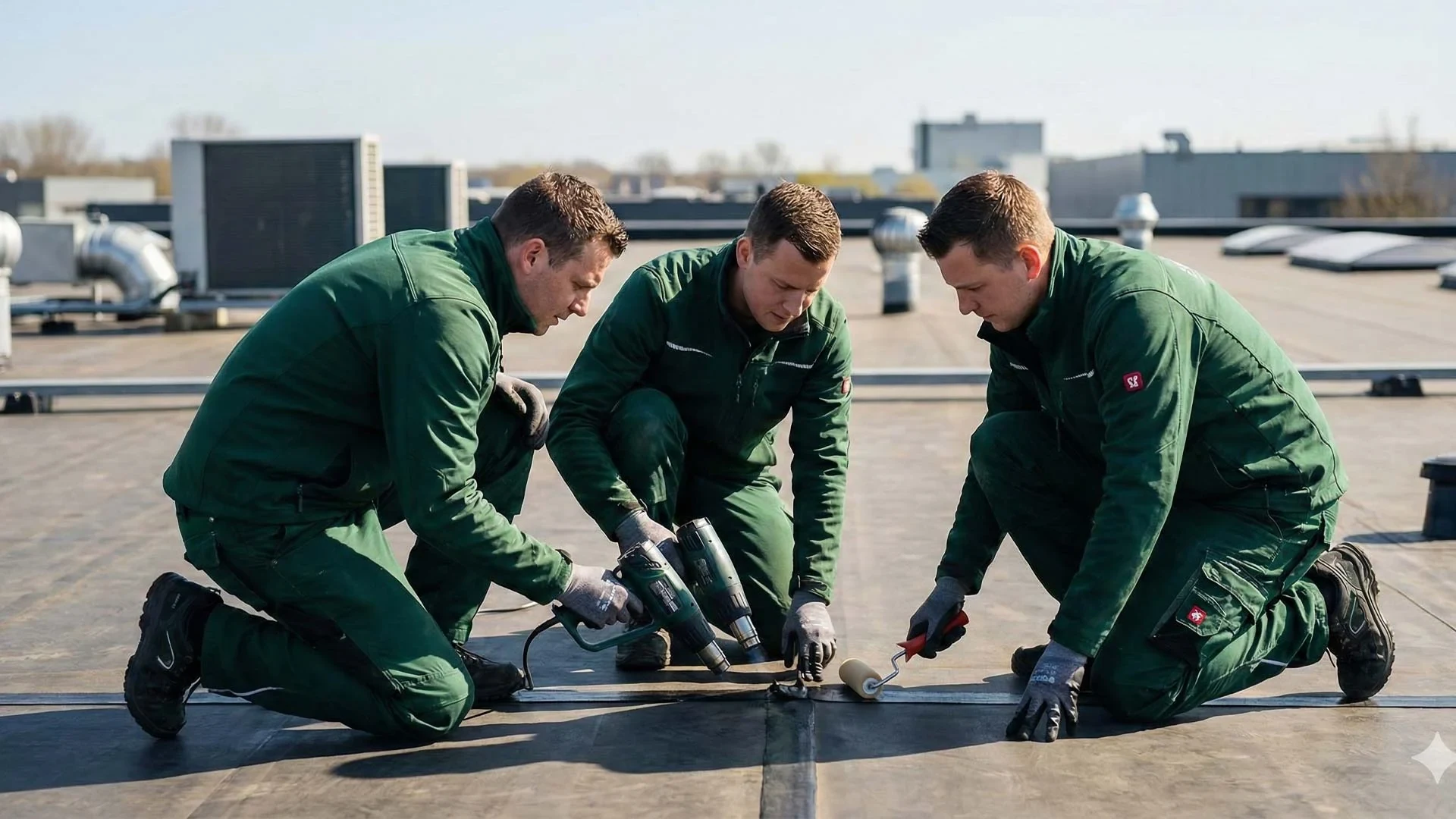
Torch-applied modified bitumen is still common, but applying open flame on an occupied government building or a campus dormitory carries real fire risk that owners should weigh before signing a scope. Cold-applied and self-adhered modified bitumen systems avoid that risk entirely, at some tradeoff in installed cost and occasionally in seam performance depending on conditions during install.
We walk owners through that tradeoff directly rather than defaulting to torch-down because it's familiar. On occupied buildings with limited emergency egress options, or buildings where a fire watch adds real scheduling cost, cold-applied is often the better call even at a higher material price.
We raise this specifically on projects at MSU dormitories and state office buildings with active public hours, where an open-flame application schedule has to work around occupancy in a way that adds real coordination cost of its own. Once an owner sees both cost pictures side by side, cold-applied is frequently the more practical choice, well beyond simply the more cautious one.
What We Check Before Recommending Re-Cover vs. Tear-Off
- Number of existing roof layers already in place, against code re-cover limits
- Deck moisture content beneath the current membrane
- Structural capacity for the added dead load of another modified bitumen layer
- Condition of base flashings at parapets and equipment curbs
- Drainage slope and whether ponding has already damaged the interply layers
Skipping that check is how an owner ends up paying for a re-cover over a deck that actually needed replacing - a mistake that costs more to unwind later than doing the tear-off correctly the first time.
We put these findings in writing, with photos and moisture readings tied to specific roof zones, so a facilities committee or a state purchasing office reviewing the recommendation can see exactly what drove the decision. That level of documentation tends to move a project through approval faster than a general narrative estimate does.
Freeze-Thaw Effects on Multi-Ply Systems
Modified bitumen handles Michigan's cold better than some other built-up alternatives, since the polymer-modified asphalt stays more flexible in low temperatures than straight asphalt does. But repeated freeze-thaw cycling still stresses flashing details and seam laps over the decades these roofs are in service, which is why base flashing condition is usually the first thing we check on an older modified bitumen roof, not the field membrane.
We've replaced base flashing alone on more than one older state building roof and resolved what the facilities team assumed was a full-roof problem, simply because the field membrane away from the parapets was still sound. That kind of targeted fix only gets found by actually walking the flashing runs, not by assuming the whole system needs replacement because one leak showed up.
Parapet flashing on older downtown Lansing buildings and some of the original state office structures often predates the current cap sheet by decades, patched piecemeal over the years rather than replaced as a system. That patchwork history is usually where we find the active leak source, even when the field membrane a few feet away is still performing fine.
Questions About Modified Bitumen Roofs
Is modified bitumen more durable than TPO for a state-owned building?
It can offer more puncture redundancy through its multi-ply construction, which matters on buildings held for decades. TPO offers other advantages, like lower installed cost and easier field repairs. The right choice depends on how long the owner plans to hold the building and what the roof's traffic and equipment load look like.
Should I be concerned about torch-down application on an occupied building?
It's worth asking your contractor directly about fire watch procedures and whether a cold-applied or self-adhered alternative makes sense for your building. We raise this proactively on any occupied structure.
How many layers of modified bitumen can be re-covered before a tear-off is required?
Code limits vary and we confirm the applicable limit for your building before recommending a re-cover, but most jurisdictions cap re-covers well before an unlimited number of layers, and structural weight becomes a factor before that limit is even reached.
Can modified bitumen be repaired in winter?
Emergency repairs can be made in cold weather with appropriate cold-weather materials and technique, though full re-roofing work is generally scheduled for warmer months when membrane and adhesive performance is more predictable.
Ready to review the roof scope?
Related Commercial Roofing Services
-
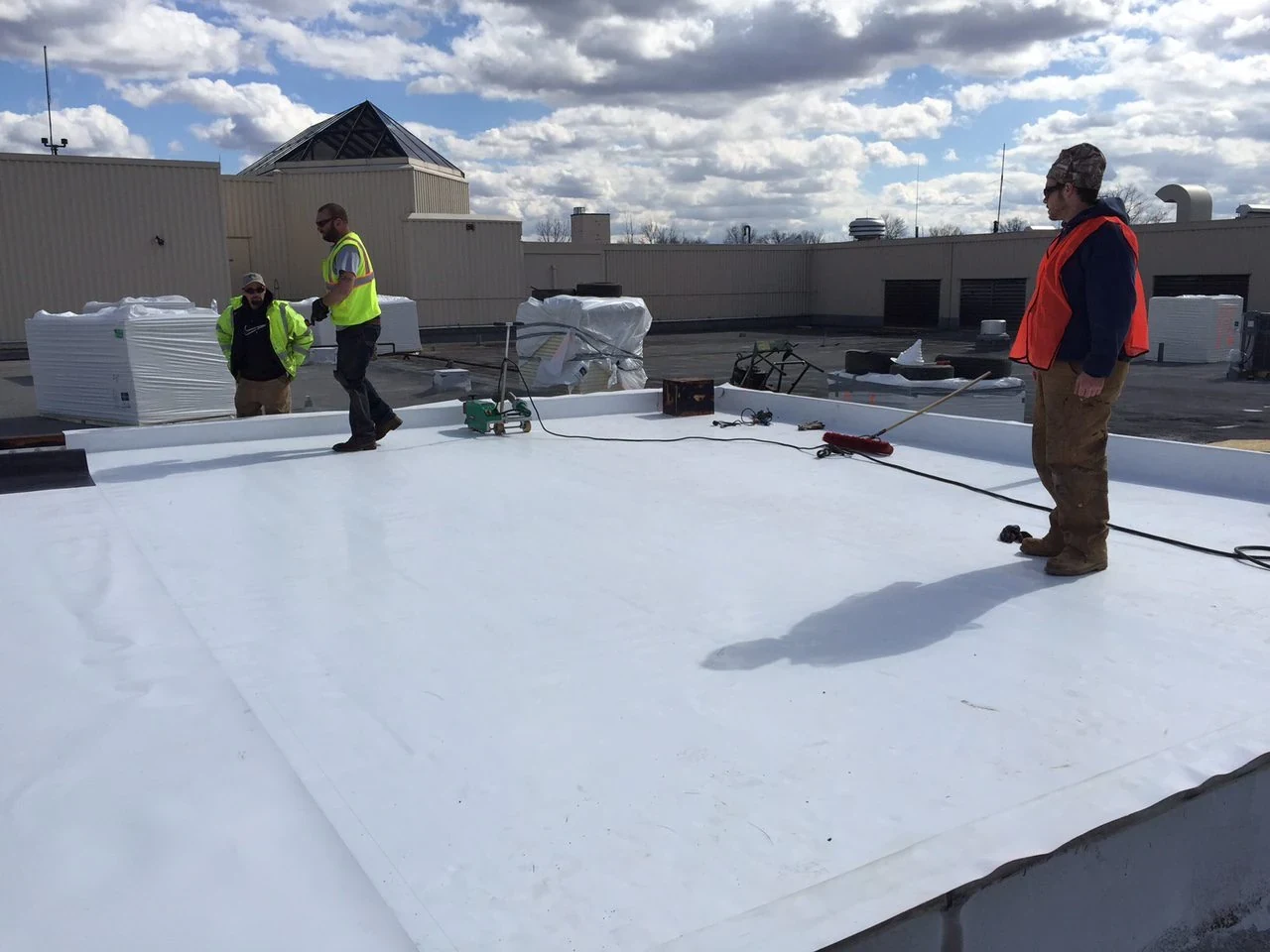
TPO Roofing for Lansing's State and Auto-Plant Buildings
View project -
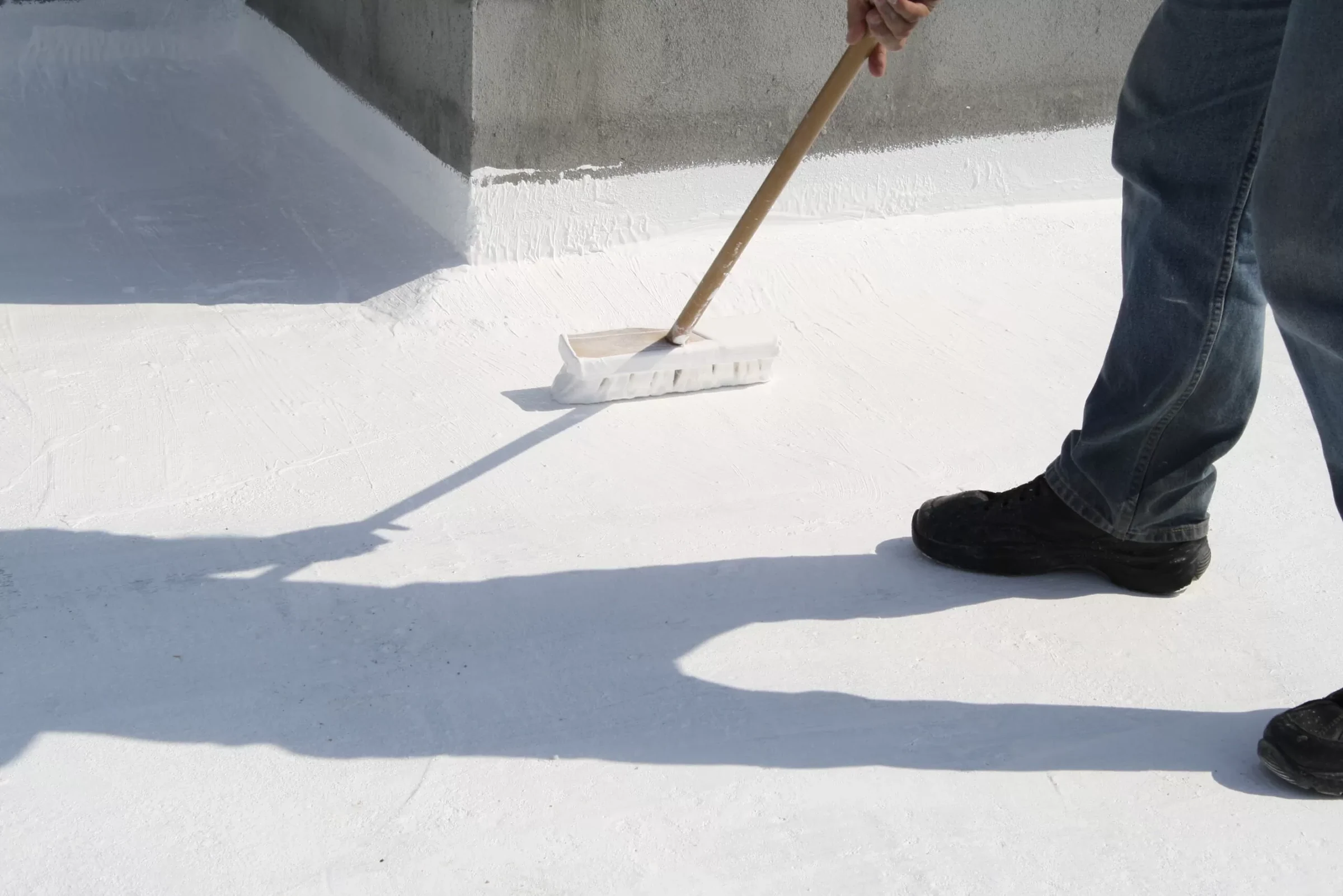
Acrylic Coatings: The Right Tool When Ponding Isn't the Problem
View project -
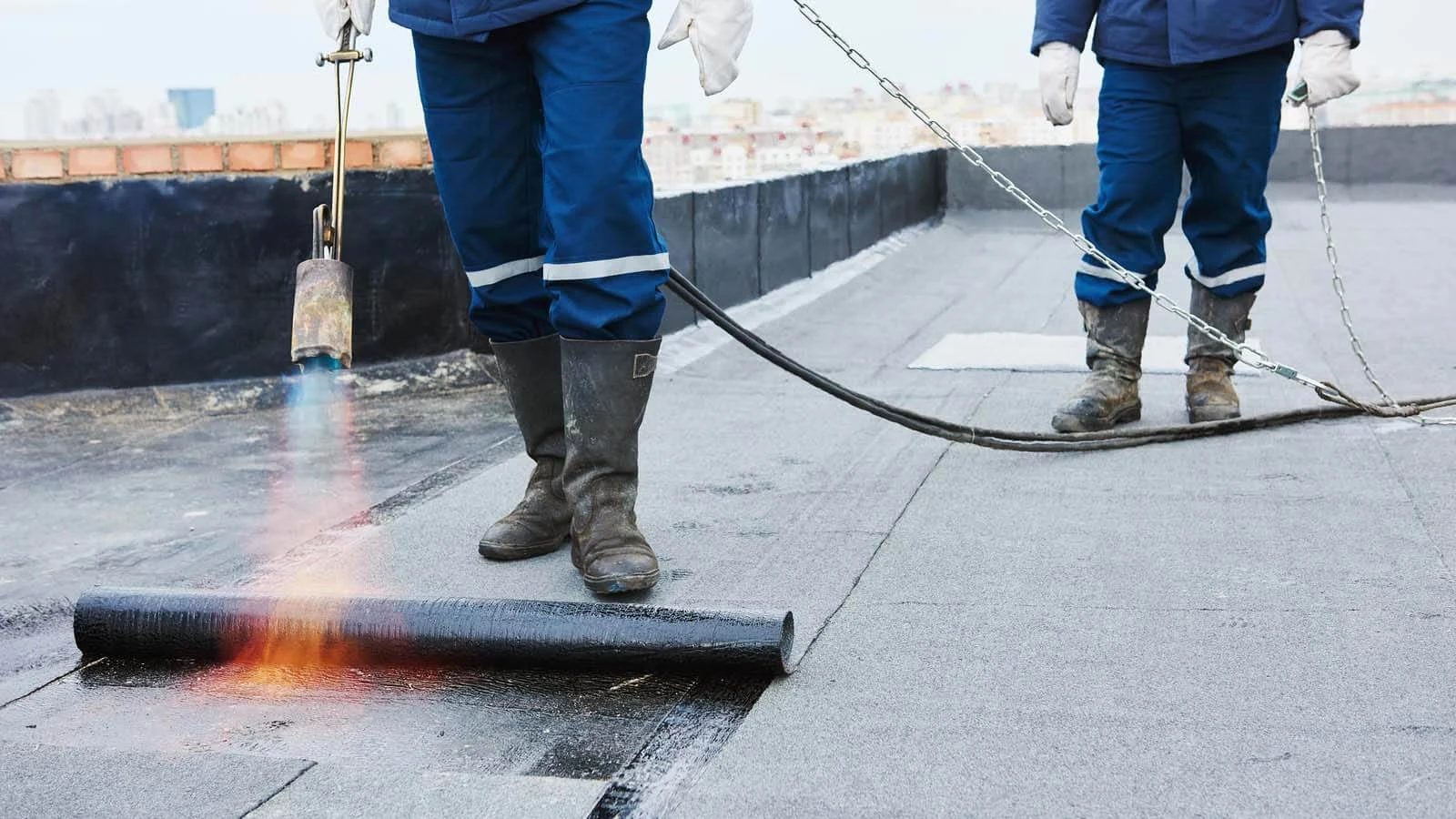
Legacy Gravel Roofs Still in Service Downtown and on Campus
View project -
Reroofing Decisions for Lansing's State, Auto, and Campus Roofs
View project -
What a Roof Inspection Should Actually Tell a Lansing Owner
View project -
Lake Lansing Humidity and School Campus Roofs Around Haslett
View project