
Commercial Roofing Contractors Mason, MI
Lansing, Michigan
Commercial Roofers in Mason, MI
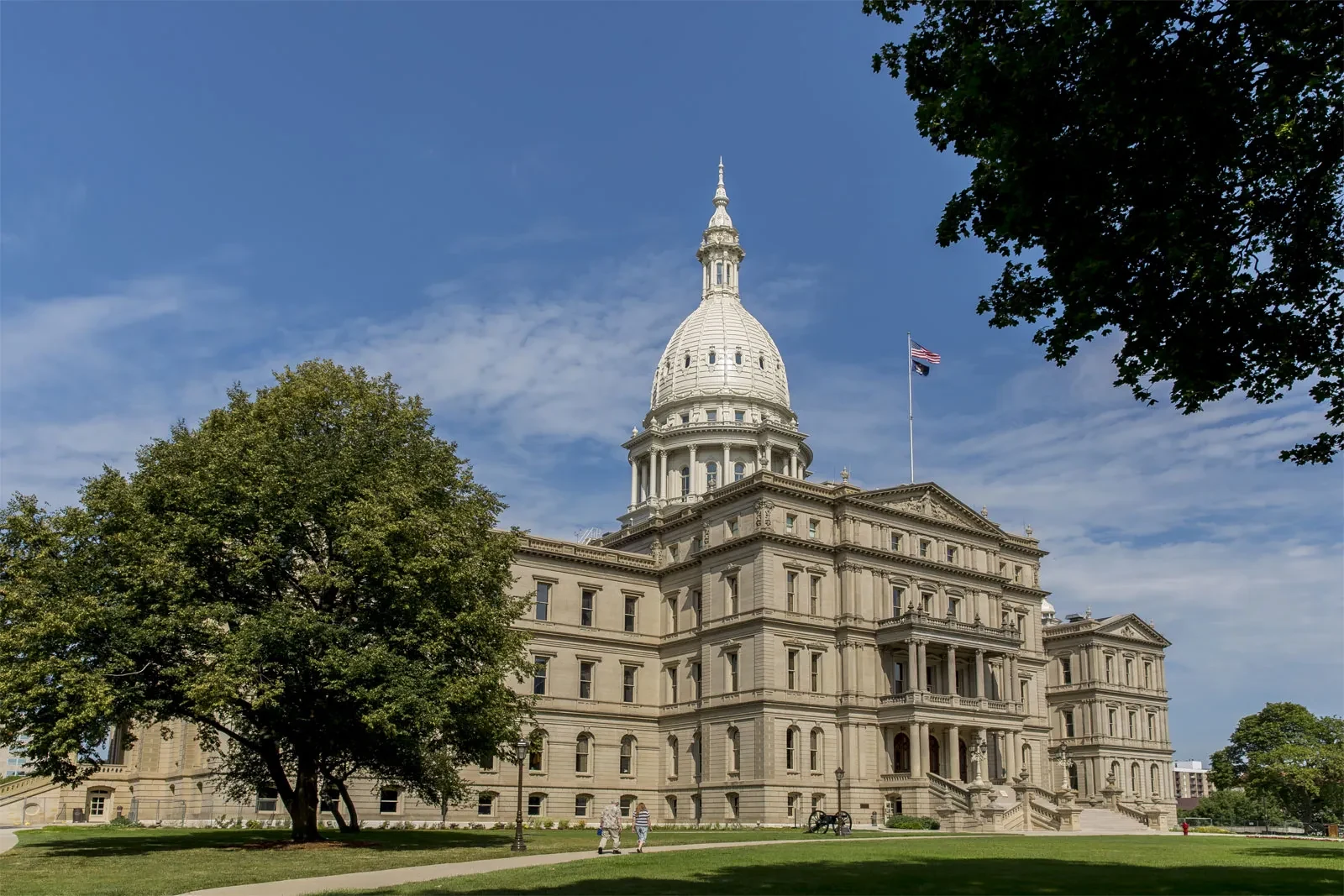
Commercial roofers serving Mason, MI should document leak sources, wet insulation, drainage, edge details, penetrations, and repair history before recommending a scope. Mason is the Ingham County seat and home to Dart Container's headquarters and production operations, and those two facts define the roofing work in this market. County government buildings around the courthouse square carry the same public-procurement considerations as any municipal roof, while Dart's manufacturing footprint brings large-scale industrial roofing with process heat and exhaust loads that a courthouse roof never has to deal with.
Manufacturing Roofs With Real Process Heat
Plastic and foam production generates process heat and exhaust that a roof deck has to tolerate continuously, year-round, not only during peak summer weather. Rooftop equipment serving production lines at a facility like Dart's Mason operations tends to run hotter and more constantly than typical commercial HVAC, and that steady thermal load affects how the membrane around those curbs ages compared to the rest of the field. We check heat-affected zones on manufacturing roofs separately from the general field inspection, because membrane exposed to sustained elevated temperatures near exhaust equipment breaks down faster than membrane that only sees normal seasonal swings.
Large production facilities also mean a roof deck carrying more distributed weight from mechanical systems than a typical commercial building, and any reroof or recover project has to account for structural load limits before specifying a system. We coordinate with facility engineering on projects at this scale rather than assuming a standard commercial specification applies, because it often doesn't once you're dealing with a working production plant's rooftop mechanical footprint.
Coordinating Roof Work With Continuous Production
A production facility that runs multiple shifts doesn't have a convenient closed window for roof work the way a retail store does overnight. We sequence work in sections, closing out each portion of the roof completely before moving to the next, so an active production area is never left with an open roof during a working shift. That approach takes longer than an all-at-once tear-off would on paper, but it's the only way to do the work without disrupting a facility that doesn't stop running.
County Government Buildings, Different Priorities Entirely
The courthouse square and surrounding county buildings bring a completely different set of considerations: public bidding requirements, budget cycles tied to county fiscal years, and older building stock where preserving the roof's appearance from the ground matters alongside its actual performance. We've found county facility roof projects move on a longer approval timeline than private work, and building that timeline into the proposal from the start avoids the scramble that happens when a budget finally clears in a season that's no longer ideal for the work.
Downtown Mason's Smaller Commercial Roofs
Away from the courthouse and the Dart facilities, Mason's downtown retail and small office buildings are a modest scale, similar in size to what we see in Holt or Williamston. Owner-operators here are budget-conscious, and repair-versus-replace decisions get weighed carefully rather than defaulted to the larger scope. The failure points we watch across Mason's full range of building types include:
- Membrane degradation in heat-affected zones near manufacturing process exhaust
- Structural load considerations before specifying new roofing systems on production buildings
- Parapet and cornice flashing on older courthouse-square buildings
- Seam integrity on small downtown commercial roofs that have seen minimal maintenance
- Drain performance across large industrial roof fields during spring thaw
Freeze-Thaw Adds a Fourth Season of Wear
Every building type in Mason deals with the same Michigan winter, but the consequences differ by roof type. On the manufacturing side, a roof already stressed by process heat cycles has less resilience left for the additional stress of freeze-thaw expansion and contraction. On the older downtown and courthouse buildings, freeze-thaw works on masonry and flashing details that were never engineered for a modern membrane system in the first place. Both situations mean winter inspection findings on a Mason roof need to be read in the context of what kind of building it is, not treated as generic seasonal wear.
Spring thaw is when a lot of this becomes visible. A roof that seemed fine through a dry January can start showing interior stains in March once accumulated ice at drains and low points finally melts and finds a path through a seam that opened over the winter. We schedule a round of spring inspections across Mason specifically to catch that lag between when the damage actually happened and when it becomes obvious inside the building.
Questions Mason Property Owners Ask Us
Does process heat from manufacturing really age a roof faster?
Yes, membrane near sustained heat and exhaust sources breaks down faster than membrane exposed only to normal seasonal temperature swings. We inspect those zones separately from the rest of the field for that reason.
Can you do roof work without shutting down a production line?
Yes, we sequence work in sections and close each portion out completely before moving to the next, so an active production area is never left exposed during a shift.
Do county building roof projects take longer to get approved?
Generally yes, public procurement and county fiscal year budget cycles add time compared to private work, and we build that timeline into the proposal from the start.
Do you check structural load before specifying a roof system on a manufacturing building?
Yes, large production facilities often carry more distributed rooftop mechanical weight than standard commercial buildings, and we coordinate with facility engineering before recommending a system.
Why do downtown Mason's small commercial roofs get patched instead of replaced?
Budget-conscious owner-operators here weigh repair against replacement carefully, and a lot of these roofs still have usable membrane life that a targeted repair can extend without the cost of full replacement.
Ready to review the roof scope?
Related Service Areas
-
Fowlerville's Industrial Park Roofs Answer to the Fairgrounds Calendar
View project -
Grand Ledge Splits Between Riverside Manufacturing and a Historic Main Street
View project -
Lake Lansing Humidity and School Campus Roofs Around Haslett
View project -
Holt's Roofs Are Smaller and the Repair-vs-Replace Math Is Tighter
View project -
What Laingsburg's Small Retail and Ag-Service Building Owners Should Expect From a Roof Inspection
View project -
Silicone Coatings as a Capital-Budget Alternative to Replacement
View project